 Skip to content
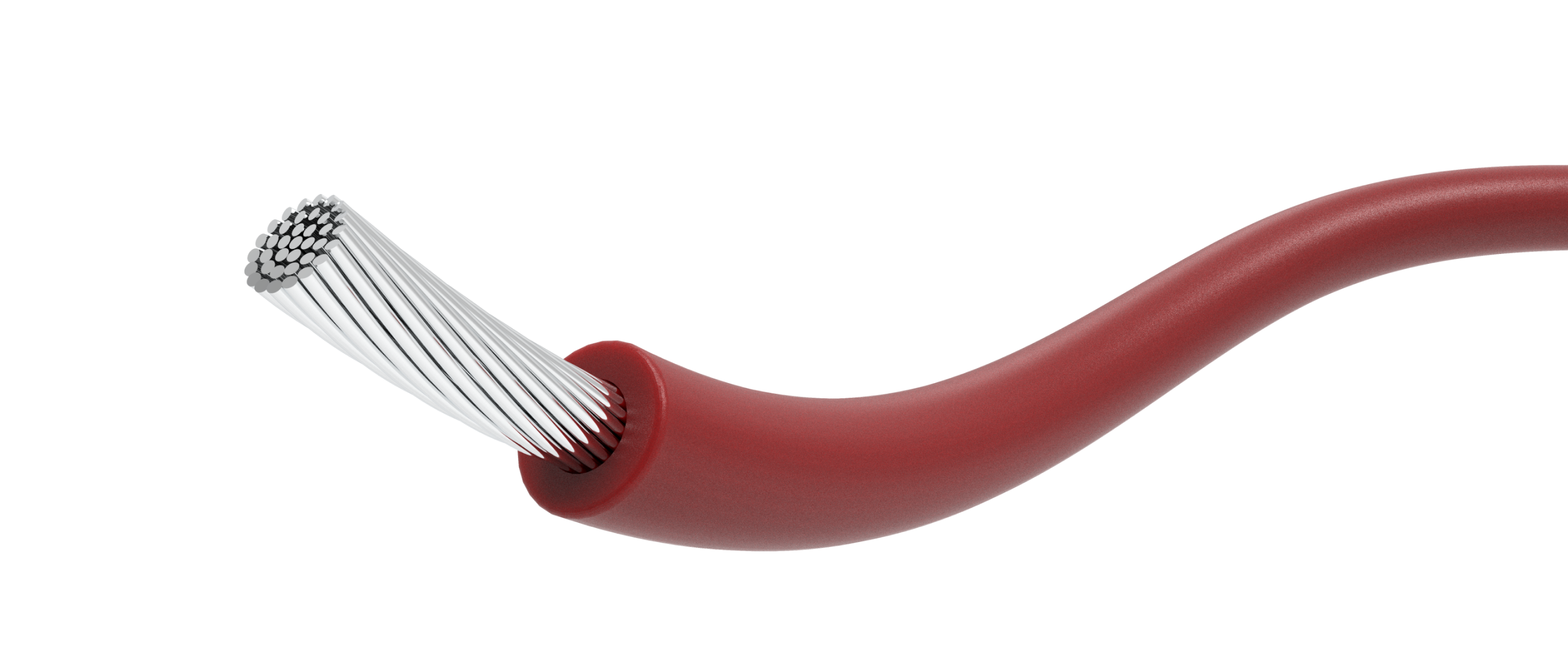
CASFLON™ 150 UL/cUL
Style 10133 (UL 10133)
Construction
Type
electrical wire
Core
bare, tin-plated, nickel-plated or silver-plated copper
Insulation
PTFE
Thermal Characteristics
Operating temperature
-65°C to +105°C / 150°C / 200°C
Electrical Characteristics
Operating Voltage
300V
Testing Voltage
1500 V
Production
Range width
AWG 30 to 18
Options
Please consult us for any special requirements
Casmo Part No. | Wire gauge(AWG) | # Strands | Diam. Of Strands(mm) | Conductor Diameter(mm) | Wall thickness(mm) | Final O.D.(mm) | Approx, Wt.(kg/km) |
|---|---|---|---|---|---|---|---|
1410206 | 18 | 19 | 0.23 | 1.15 | 0.21 | 1.57 | 9.51 |
1410207
| 20 | 19 | 0.19 | 0.95 | 0.21 | 1.37 | 6.19 |
1410208 | 22 | 19 | 0.16 | 0.8 | 0.21 | 1.22 | 4.48 |
1410209 | 24 | 7 | 0.2 | 0.6 | 0.21 | 1.02 | 3.21 |
1410210 | 26 | 7 | 0.16 | 0.48 | 0.21 | 0.90 | 2.32 |
For more details, please download the sheet.
Downloads
Technical data sheet
General Characteristics
Weather conditions
excellent resistance to UV
Chemical behaviors
excellent resistance to aggressive chemical environments
Humidity
excellent resistance to humidity
Mechanical behaviors
excellent mechanical strength
Application
General use
internal cabling for electrical appliances or electronic appliances
Industry
cabling for industrial machines
Electromechanics
cabling for rotating machines
Household appliances
cabling for household electrical heating appliances
Frequently Asked Questions (FAQ)
Rated up to 200°C with PTFE insulation, it withstands extreme heat in harnesses, preventing failures and ensuring signal integrity in demanding flights.
NEMA HP4 Type KK and ISO alignments ease waterproof certifications, reducing export barriers for offshore or marine electrical systems.
Sizes from 30 AWG to 2000 kcmil allow customization for high-current needs, optimizing for low resistance in industrial or lighting setups.
Optional oil resistance guards against degradation in marine or industrial exposures, extending durability and cutting replacement costs.
Horizontal flame compliance prevents spread in multi-conductor designs, enhancing safety in instrumentation and minimizing risks in critical infrastructure.
